
Manju GC gets a new identity through entrepreneurship.
Please follow & like us :)






31 Dec, 2025
Having lost her husband early, and with the responsibility of improving the family’s economic condition and meeting the expenses of educating her children, Rajpur rural municipality–2, Baluwa Danda, Dang resident Manju GC, aged 41, felt that she had to do something, even if it was small. She is the eldest daughter-in-law of the family. There are six members in her family. They had been raising one buffalo, and the household expenses were managed from the income earned by selling milk. However, the family expenses were increasing day by day, and she remained worried about how to meet them.
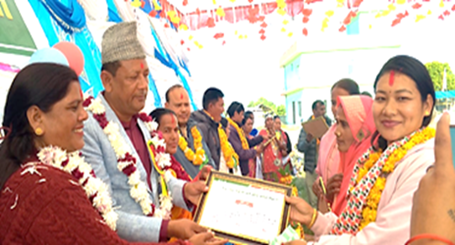
With financial and technical support from Heifer Project Nepal, the Rural Women Development Centre (RWDC), in coordination with Rajpur Rural Municipality, started implementing the project “VITA Rajpur”—a partnership project focused on agriculture and livestock-based small farmers and youth entrepreneurship in Rajpur. As part of this, group formation activities began. Together with 25 members, they formed the Sagarmatha Women Entrepreneurs Group. “At first, we thought the project would be just like previous ones, but after the group was formed, regular meetings started, saving practices began, and a cooperative was established. From our group, 23 members also became involved in the cooperative,” said Manju GC.
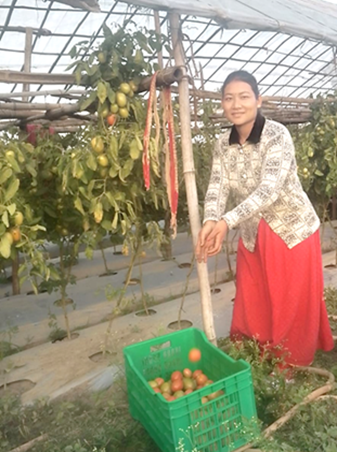
Manju, who had already been engaged in buffalo rearing, showed interest in vegetable farming. Through the project, when a tunnel (plastic tunnel/greenhouse) was provided in Ward No. 2, she also received one. After receiving the tunnel through the organization via the project, she constructed it and started vegetable farming. For Manju, who was new to vegetable cultivation, this was a completely new experience. However, after engaging in vegetable farming for the past year, she earned an income of NPR 125,000 by producing and selling tomatoes alone from one tunnel in a single season.
A new business initiative began in her family—tomatoes, cucumbers, and other vegetables—through which she sold a total of 386 kg of produce. Her confidence increased significantly. Her hard work and perseverance brought success in vegetable production. At present, she has started producing seasonal and off-season vegetables based on market demand on approximately 3 kattha of land.
Earlier, her family had to buy vegetables from the market for consumption, but now she happily shares that they confidently consume fresh, clean, and organic vegetables produced by them. Currently, tomatoes, cucumbers, and cauliflower are flourishing well in her field. She has also started selling surplus vegetables, such as tomatoes, cucumbers, and cauliflower.
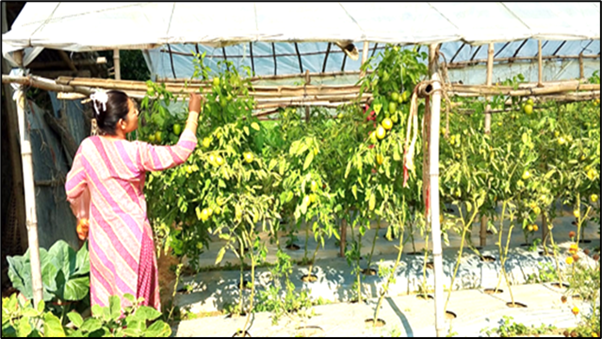
This story has shown that even women confined within the four walls of the home can engage in income-generating work while staying at home. Being able to earn an income has taught them to live with self-respect and dignity. “The project implemented by RWDC, aimed at transforming small farmers and youth into entrepreneurs, has now given me the self-confidence to run my own business independently,” added GC.


