
Continuity of Orientation program, women for land rights.
Please follow & like us :)






20 Dec, 2025
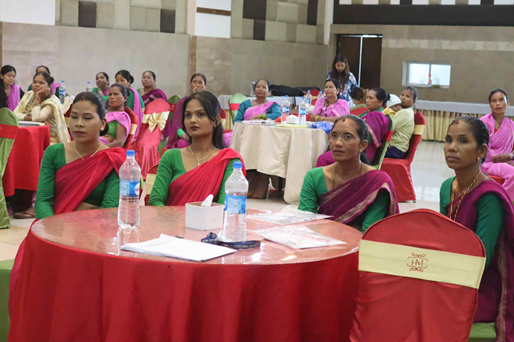
Although the context and time period may differ, it explains that opportunities were provided to learn and understand many issues such as women’s needs related to land, information on land and housing, women’s rights to land, the Land Policy 2018 (2075 BS), land measurement and mapping, and the arrangements and efforts made to ensure women’s ownership of land.
With a slim body and a smiling face, she has won everyone’s heart and seems to have begun a new phase of work. Loved by all and regarded as dear by everyone, Suntoli Chaudhary, a resident of the Mukta Kamaiya Settlement, Syantikampur, Ward No. 16, Ghorahi Sub-Metropolitan City, shares this experience.
With financial support from NIVAS and the Met Life Foundation, and under the implementation of the Rural Women Development Centre (RWDC), a one-day literacy orientation program on land and housing was conducted in Dang district under the project on strengthening women from marginalized families through secure housing and promoting awareness and advocacy on women’s ownership of land.
While speaking at the program, Suntoli emphasized that until women are given access to land and ownership rights, they will continue to be treated as second-class citizens.
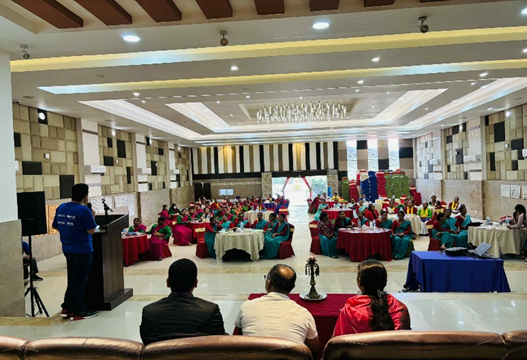
She further expressed great happiness at having gained information during the program about the legal provisions in Nepal that protect the rights and interests of landless people, squatters, freed Kamaiya and Haliya, and other marginalized and displaced communities. While sharing these learning, Suntoli also narrated her own life story.
Having spent up to 22 years of her life working as a bonded laborer (Kamlarī) in other people’s homes, Suntoli believes that if women become economically empowered and educated, the world can be changed.
Born in Ward No. 5 of Gadhawa Rural Municipality, Chaudhary is the eldest daughter in a family of six, with two brothers and one sister, along with her parents. The family lived in extreme poverty and constantly struggled to manage daily meals.
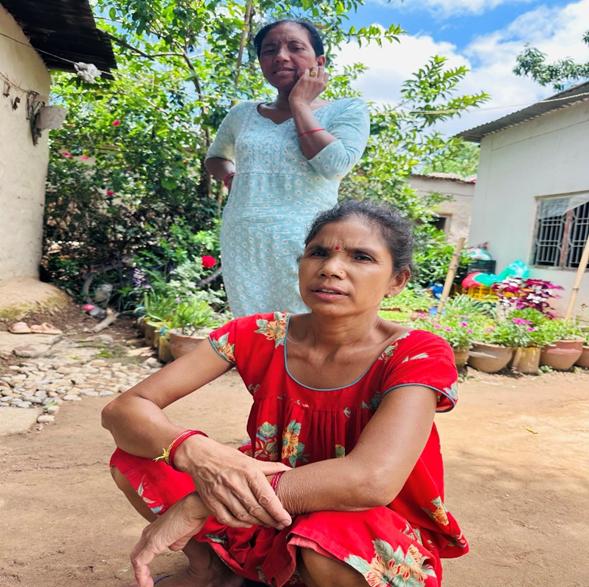
Suntoli recalls that for the first time, at the tender age of eight, she had to live as a Kamlarī for an entire year just to receive two sets of clothes per year and a measure of rice. She says that those days still remain deeply etched in her memory.
There was no rest from household work in others’ homes. She had to wake up early in the morning and work continuously without regard to cold or heat—washing dishes, cleaning cowsheds, cutting grass, cooking food, washing clothes, plastering floors and walls with mud, collecting firewood from the forest, grazing cattle, and many other tasks. Suntoli began doing all these chores from that very young age.
While working, she felt hungry throughout the day but was not given food. She had to do all the work with only the handful of food eaten in the morning and evening. Recalling this pain, tears filled Suntoli’s eyes. She says she had to keep working and try to suppress her hunger by drinking water. Remembering how she worked even when her stomach cramped with pain, Suntoli reflected on her past.
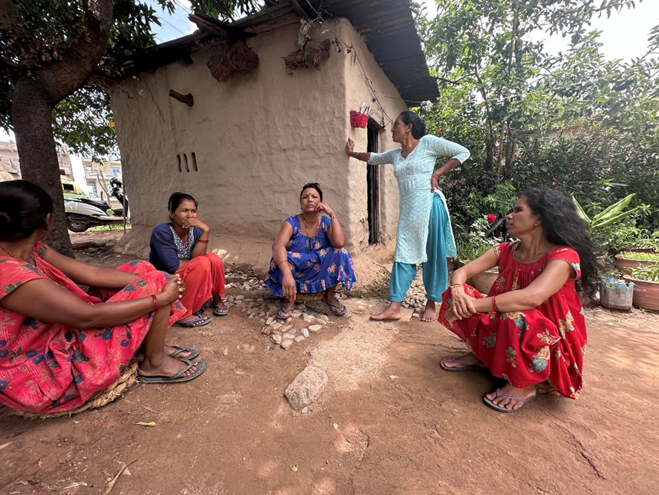
According to her, it was not the fault of her parents or her brothers and sisters; extreme poverty forced her into bonded labor. She says that at that time, if she had not gone to work as a Kamlarī, the family would have had nothing to eat.
Initially, Suntoli worked as a Kamlarī for one year in exchange for 16 pathis of rice. Later, she continued working as a Kamlarī under the condition of receiving 42 pathis of rice per year and two sets of new clothes.
Even after marriage, Suntoli was compelled to continue working as a Kamlarī. The poverty remained the same, the situation unchanged, and there was no happiness in being a Kamlarī. Suntoli worked as a Kamlarī for many years. She now has four children.
Her eldest son is engaged in foreign employment, her daughter-in-law has a job, one daughter is studying at school, and her youngest son is currently studying Information Technology (IT).
After the birth of her children, Suntoli developed a strong desire to educate them. She feared that if they were not educated, they too would end up working in other people’s homes just like she had. However, when the Government of Nepal officially declared the abolition of the Kamaiya system, Suntoli also began to raise her voice on this issue.
She shared that about 21 years ago, after the then District Administration Office arranged settlement for freed Kamaiya families at Syantikampur, Ward No. 16, Ghorahi Sub-Metropolitan City (Freed Kamaiya Settlement), her family has been living permanently in that location.
Although Suntoli had to endure extreme pain and hardship while working in other people’s homes, she never felt ashamed of hard work. To manage the expenses of her children’s education, she worked breaking stones in riverbeds and carried fruits and vegetables from the market to sell door to door. Even today, Suntoli continues to visit villages and communities selling traditional Tharu items such as handmade baskets and fishing nets.
Suntoli is now 59 years old. At this stage of her life, the one lesson she has clearly learned is this: whether rich or poor, women are still treated as second-class citizens as long as land is not registered in their names. Until women own land, they cannot become economically empowered, and without economic strength, women’s self-confidence cannot grow. She explains that land and property play a vital role in enabling women to become self-reliant, participate actively in economic activities, and build confidence.
Therefore, Suntoli Chaudhary strongly believes that for women to meaningfully contribute to the economic development of the village, society, and the nation, land ownership must be in women’s names.
Sharing that she has learned many important things through her own experiences, Suntoli further explained that under the project “Strengthening Marginalized Women through Secure Housing and Promoting Awareness and Advocacy on Women’s Land Ownership”, implemented in Dang district by the Rural Women Upliftment Center with financial support from NIVAS and the Met Life Foundation, the land and housing literacy orientation program helped her clearly understand the legal processes related to land and housing, existing laws, government provisions for women’s land ownership, and the necessary steps for reform.
She said that learning and understanding these issues formally through the orientation greatly increased her motivation and confidence. Suntoli also shared her belief that if such programs are expanded step by step and effectively taken to the community level, they can be highly impactful and beneficial.


